Kenya could unlock new employment opportunities and promote inclusive economic growth by digitising indigenous languages and developing artificial intelligence (AI) systems that reflect local realities, technology advocate Professor Bitange Ndemo has said. Ndemo, a former Permanent Secretary for Information and Communications, said local language data could help make AI-powered services more accessible while enabling communities to develop technology solutions suited to their economic and social needs.
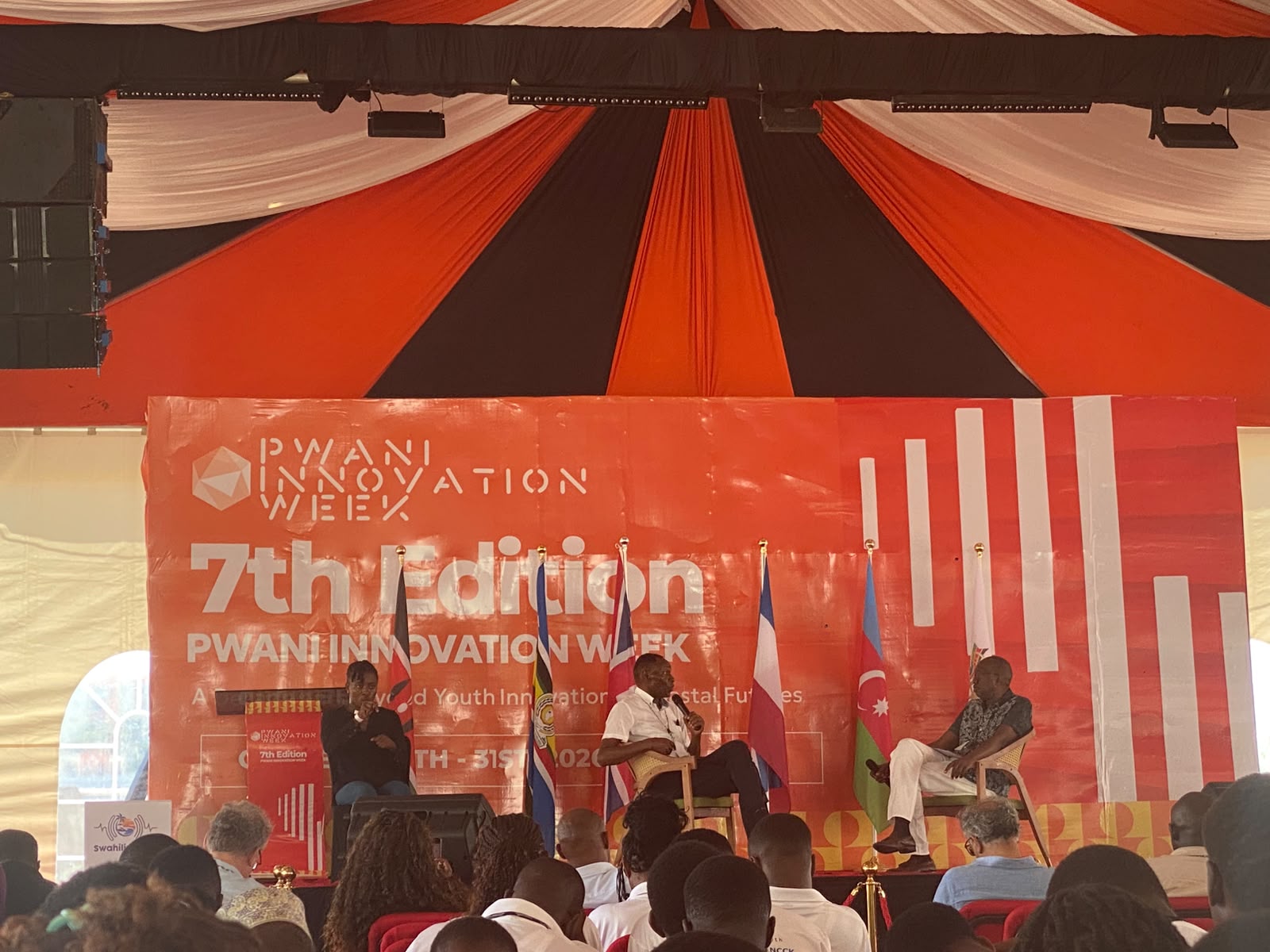
Speaking during a fireside chat moderated by Michael Onyango at the seventh edition of Pwani Innovation Week in Mombasa, he challenged participants to translate concepts such as productivity and data into their mother tongues. He offered Sh1,000 for accurate translations, arguing that the difficulty participants experienced demonstrated how some communities use technical concepts in English without fully understanding their meaning in local languages.
Ndemo said the experience highlighted the need to develop indigenous language resources that can support education, research and technological innovation.
Indigenous Languages Could Improve Digital Learning
Ndemo argued that teaching children in languages they understand can improve comprehension and make learning more inclusive. He cited research suggesting that children taught in their mother tongues could experience significantly better comprehension, although the specific claim of nearly 50 per cent improvement would require further supporting evidence.
He also highlighted the potential of AI-powered personalised learning tools to adjust educational content to individual learners’ abilities and pace.Such systems could help learners who require more time to understand concepts receive tailored support rather than being left behind by standardised teaching approaches.
For Kenya’s education and TVET sectors, local language AI applications could support digital learning, technical instruction and access to educational resources among communities with limited proficiency in English.
AI Could Expand Rural and Blue Economy Employment
Contrary to concerns that artificial intelligence will eliminate jobs, Ndemo argued that the technology could create millions of economic opportunities, particularly in rural communities and the blue economy. He explained that agentic AI systems could help small-scale farmers make informed production decisions by analysing available data, predicting market demand and comparing the potential returns of different agricultural activities.
For example, a farmer cultivating one acre could use AI-powered recommendations to assess whether alternative enterprises such as mushroom farming or poultry production would offer better returns than conventional maize farming. Such tools could help farmers make decisions based on projected earnings, market conditions and available resources.
Ndemo also pointed to emerging opportunities along Kenya’s coastline, including seaweed-based textiles, sustainable fishing and marine products. He said innovations emerging from coastal hubs demonstrated how technology could support new enterprises and create livelihoods around marine resources.
Kenya Pursues Development of Sovereign AI
Ndemo revealed that Kenya was developing a sovereign artificial intelligence model expected by November, which he said would reflect African experiences, knowledge and perspectives. Unlike AI systems primarily trained on datasets dominated by foreign contexts, a locally developed model could incorporate indigenous knowledge, languages and information relevant to African communities.
He argued that such technology would help challenge outdated narratives about Africa while supporting locally relevant applications, including approaches to mental health. Developing sovereign AI, however, would require substantial local datasets, technical expertise, infrastructure and governance frameworks to ensure the technology remains reliable, secure and accountable.
Concerns Emerge Over AI and Job Displacement
Participants at the forum raised concerns about the potential impact of AI on employment, particularly in sectors such as hospitality, where automated systems could take over some tasks traditionally performed by workers. Questions were also raised about the risks of relying on AI for emotional support and other sensitive human interactions.
Ndemo maintained that the technology should be viewed as an opportunity to develop new solutions rather than simply as a threat to existing jobs. He said Kenya already had access to many of the tools required to advance AI adoption, but needed to ask the right questions, develop local datasets and establish consistent governance structures.
What AI Development Means for Kenya’s Skills Sector
Ndemo’s remarks highlight the growing importance of digital skills, data development and local innovation in preparing Kenya’s workforce for an AI-driven economy. For universities and Technical and Vocational Education and Training (TVET) institutions, the emerging opportunities extend beyond using existing AI applications to developing the expertise needed to build, maintain and adapt them.
Potential areas of opportunity include:
- Indigenous language technology: Developing digital language databases, translation tools and speech-recognition systems.
- Agricultural technology: Creating AI applications for farm management, crop selection, market forecasting and productivity.
- Marine innovation: Developing technologies for sustainable fishing, seaweed processing and other blue economy enterprises.
- Software engineering: Training young people to build locally relevant AI applications and digital products.
- Data science: Equipping learners with skills in data collection, analysis, management and responsible AI development.
The discussion at Pwani Innovation Week reinforces the importance of investing in local research, digital infrastructure and skills development. As artificial intelligence becomes increasingly integrated into education, agriculture, business and public services, Kenya’s ability to develop technology around its own languages, knowledge systems and economic priorities could shape new pathways for entrepreneurship and employment.