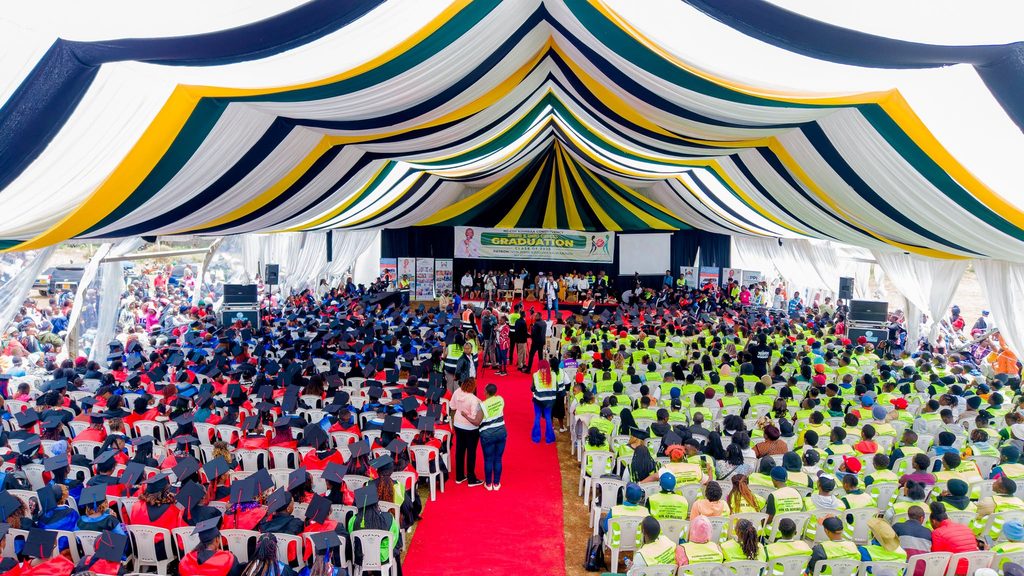
Young people from Kiambaa Constituency have graduated after completing short courses designed to equip them with practical skills for employment and self-employment. The graduates received training in caregiving, driving, bartending, hospitality and cosmetology under the Kiambaa National Government Constituencies Development Fund (NG-CDF) Short Courses Programme.
The training was conducted by Premiere Institute and funded through the constituency’s NG-CDF allocation. Kiambaa Member of Parliament John Kawanjiku presided over the graduation ceremony held at Karuri Primary School grounds, where he encouraged the graduates to use their newly acquired skills to pursue employment and establish income-generating ventures.
Programme targets youth unemployment
Kawanjiku said the initiative was established to prepare young people for labour market opportunities and strengthen their ability to earn a living.
“We are grateful to all the young people who have graduated from the various courses under our Short Courses Programme,” he said.
He added that the programme was intended to translate the mandate entrusted to elected leaders into practical opportunities that improve livelihoods. The MP singled out caregiving as an important area of training, noting the growing demand for trained caregivers both locally and internationally.
He said the objective was to help trainees turn their skills into sustainable sources of income.
“We are investing in practical skills that open doors to employment, create opportunities for self-reliance and improve livelihoods,” he said.
Kawanjiku also challenged the graduates to mentor other young people in their communities and encourage them to take advantage of skills training opportunities.
Training partnership expands access to practical skills
Officials from Premiere Institute welcomed the partnership with Kiambaa NG-CDF, saying it had enabled young people who might not afford conventional college training to acquire marketable skills within a shorter period.
Some graduates said they planned to seek employment immediately, while others intended to use their training to establish small businesses.
The programme is part of wider efforts by the constituency to address youth unemployment, bridge skills gaps and promote economic empowerment at the grassroots.
Kawanjiku pledged to expand the initiative in subsequent intakes and introduce additional courses aligned with changing labour market needs.
Short courses offer alternative skills pathways
The Kiambaa initiative highlights the role of short-term vocational training in giving young people access to practical skills without necessarily following longer academic programmes. Courses in caregiving, hospitality, driving and cosmetology can provide entry points into employment and entrepreneurship, although graduates’ prospects will also depend on recognised certification, practical experience and available market opportunities.
Expanding such programmes while strengthening links with employers and industry could help ensure that training responds to actual demand for skills.