More than 9,450 young people have benefited from the Murang’a Youth Service (MYS), a county government initiative combining paid community work, vocational training and start-up support to address youth unemployment. The programme’s 10th cohort has received work tools and Personal Protective Equipment (PPE) at designated ward-level distribution centres ahead of beginning a two-month paid community service assignment across the county.
Governor Dr Irungu Kang’ata said the initiative was designed to provide young people with temporary income while equipping them with practical experience and skills to improve their employment and entrepreneurship prospects. He said the provision of protective equipment would help safeguard recruits against workplace hazards as they undertake various community assignments.
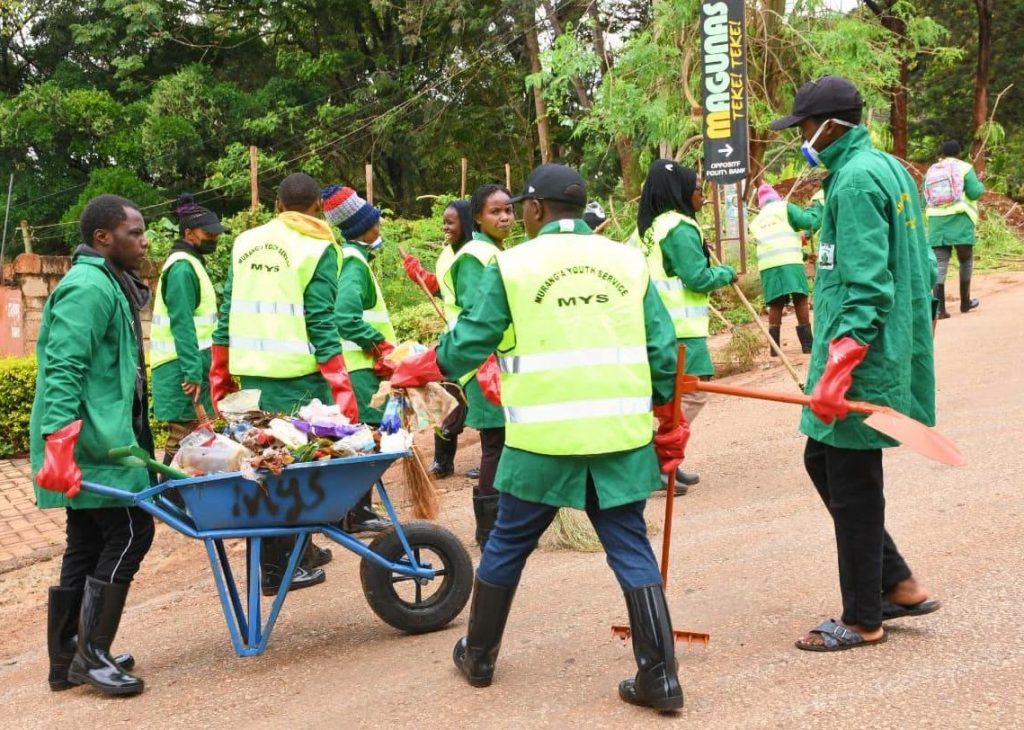
Paid community work followed by vocational training
During the two-month placement, recruits will participate in activities such as town cleaning, drainage maintenance and environmental conservation. After completing the community service phase, they will proceed to vocational training centres for three months of skills development.
The training will cover different trades based on participants’ interests, with the aim of equipping them with marketable competencies for employment or self-employment. The programme therefore combines short-term income opportunities with practical training, allowing beneficiaries to gain work experience while preparing for longer-term economic activities.
Graduates receive business start-up support
According to Kang’ata, participants who successfully complete the programme also qualify for Sh15,000 in start-up capital to help establish small businesses using the skills acquired during training. The county further offers a one-year waiver on business permit fees to give newly established enterprises time to grow.
The governor said the combination of vocational training, financial support and reduced business costs was part of the county’s wider strategy to promote youth economic independence. He added that the ultimate goal was to develop skilled and productive young people capable of creating employment for themselves and others.
Ward-based recruitment expands access
The county has adopted a ward-based recruitment model across its 35 wards to widen access to the programme and promote fairness in selecting beneficiaries. The latest cohort brings the total number of young people reached by the initiative to 9,450, strengthening its role in linking community development with vocational education and entrepreneurship.
For the TVET sector, the programme demonstrates how county governments can connect vocational training institutions with practical work experience and local economic development. Its approach also highlights the importance of supporting trainees beyond the classroom through start-up financing and an enabling environment for small businesses.