Young learners in Kenya are increasingly turning to science, technology, engineering and mathematics (STEM) to develop homegrown solutions to everyday challenges, demonstrating how practical skills can transform classroom learning into innovation. Through the Centre for Mathematics, Science and Technology Education in Africa (CEMASTEA) STEM Boot Camp, learners are gaining hands-on experience in coding, robotics and Artificial Intelligence (AI), with the aim of applying technology to real-world problems.
Among the young innovators putting these skills into practice are 15-year-old Allysa Pendo and 13-year-old Emmanuel Anderson, who are developing solutions in waste management and digital learning.
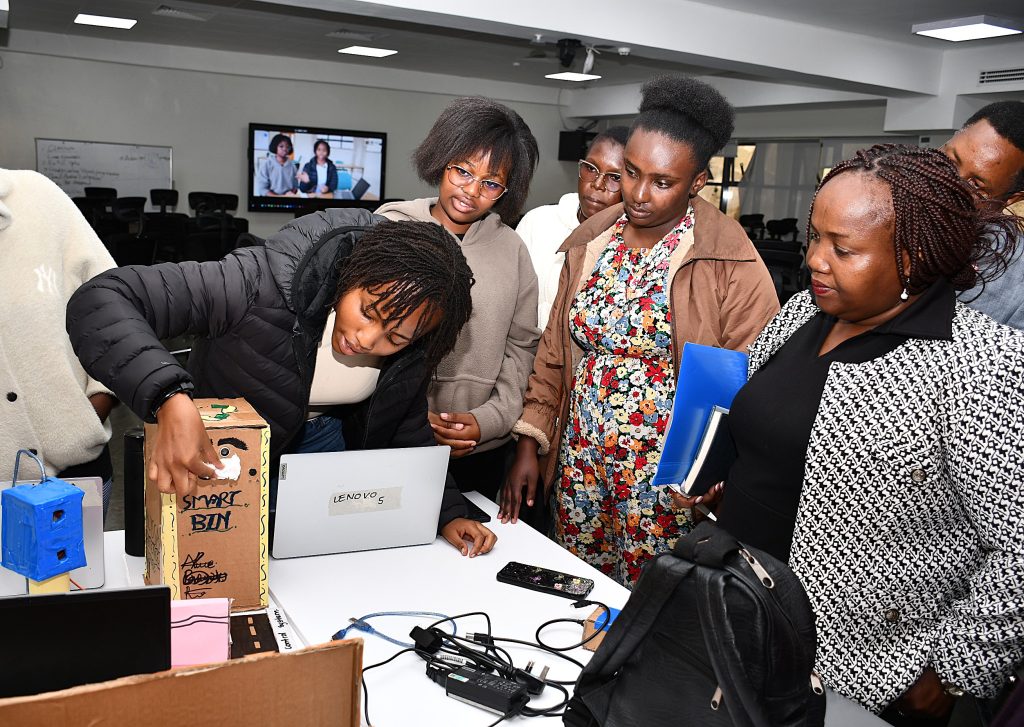
Student develops automated smart dustbin
Pendo is leading a team of learners developing an automated smart dustbin designed to minimise contamination and reduce direct contact with potentially harmful waste. The innovation uses an Arduino microcontroller and a proximity sensor to detect solid waste and automatically open the dustbin lid. By reducing the need to touch the lid, the system is intended to promote hygiene and minimise the risk of spreading infections.
“This dustbin is powered by a microcontroller and it incorporates a proximity sensor that detects solid waste and automatically opens the lid,” Pendo explained.
The project combines accessible hardware, including Arduino and NodeMCU, with programming languages such as C++ and Python to create an automated waste-management solution.
Pendo said the project demonstrates how learners can combine scientific concepts and programming to develop practical innovations.
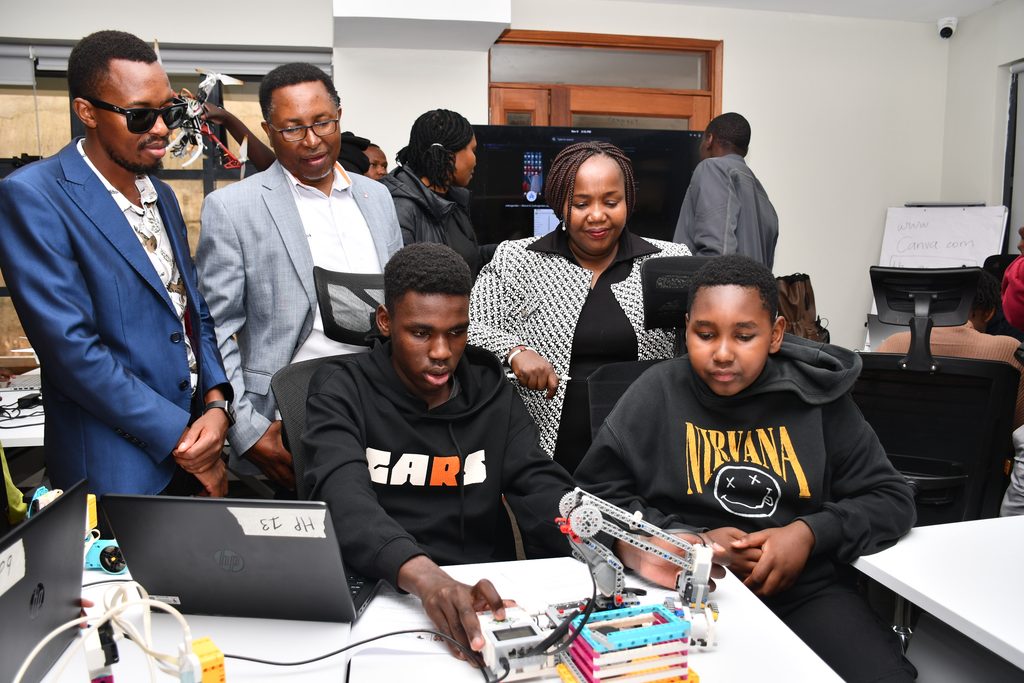
Teenager explores technology-driven learning
Meanwhile, Anderson has developed an interactive mobile application that allows learners to select different subjects and topics for revision and access learning materials. He hopes to expand the idea into a digital library that connects young learners with educational and entertaining content through an interactive platform.
“My thinking is beyond conventional remedial experiences for students. I aspire to develop a mobile application that connects young users to a fun-packed digital library,” Anderson said.
The project reflects the growing role of mobile technology in education, particularly in making learning materials more accessible and encouraging independent study.
For both innovators, turning ideas into functional projects requires patience, concentration, teamwork and creativity.
Their learning process begins with basic programming concepts such as algorithms, commands and sequences, using familiar examples to introduce learners to computer programming.
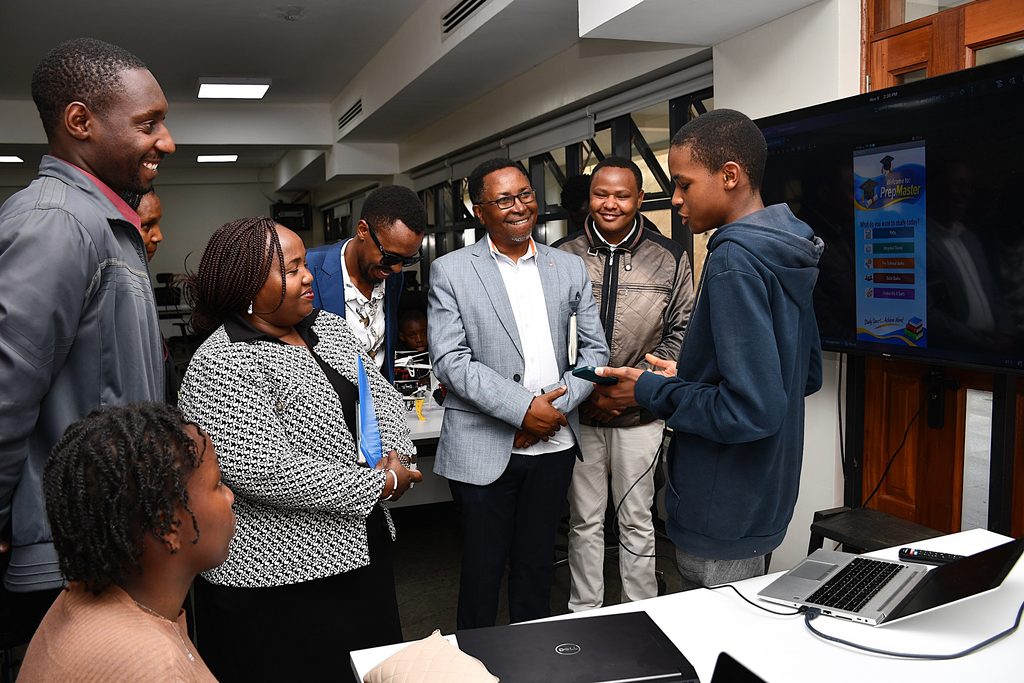
STEM boot camp equips 57 learners with practical skills
Pendo and Anderson were among 57 learners who completed a five-day interactive STEM Boot Camp at CEMASTEA.
The programme exposed participants to coding, robotics, artificial intelligence and other emerging technologies through practical learning activities.
Speaking during the closing ceremony in Nairobi, Ministry of Education Coordinator of the Kenya Science and Engineering Fair (KSEF), Tabitha Kariuki, challenged learners to focus on developing innovations that address challenges within their communities.
She said digital literacy had become an essential skill for young people preparing to participate in an increasingly technology-driven economy.
“Digital literacy has evolved from a luxury to an essential skill for the next generation of leaders and innovators,” Kariuki said.
She highlighted areas such as bionics, Linux Essentials, robotics, creative coding, mobile application development, 3D design and graphic design as important skills for the future workforce.
“When you understand the design of mobile Apps or programme robots to solve real-world problems, you’re not just learning technical skills,” she said.
Kariuki added that these competencies could position learners for opportunities across industries increasingly shaped by technology.
Coding and robotics strengthen competency-based learning
CEMASTEA Coordinator of STEM Programmes Makoba Kizito said coding was an important component of the Competency-Based Education (CBE) curriculum and would become increasingly relevant as automation, machine learning and artificial intelligence continued to develop.
“The world is pivoting to automation. So, in the next decade, if you will not be able to code, you will be technically illiterate,” Kizito observed.
He said the boot camp was designed to develop logical thinking, collaboration and problem-solving abilities among learners.
Kizito also called for greater emphasis on practical competencies, creativity and critical thinking rather than an overreliance on academic grades.
“We are helping enhance students’ ability in problem-solving and communication. By teaching learners problem-solving skills early, through coding, they are better prepared for the world,” he said.
He noted that early exposure to practical STEM activities could encourage more learners to pursue science and technology-related careers.
Through coding, robotics and machine learning, learners can translate scientific and mathematical concepts into working projects, helping them understand how classroom knowledge applies to everyday challenges.
Early digital skills exposure prepares learners for future careers
Pendo said introducing technology education at primary school level was important in preparing children for future opportunities.
“We have to grow our knowledge of technology from primary school. You have heard about coding that is now a part of our curriculum to ensure technology becomes part of our journey from primary school all the way to university,” she said.
Anderson said developing mobile applications had made science more interesting by combining learning with creativity, fun and critical thinking.
A facilitator in mobile application development, Bernard Kamotho, also emphasised the importance of equipping young learners with computer skills to prepare them for an increasingly competitive digital economy.
The 13th edition of the CEMASTEA STEM Boot Camp was held at the institution’s Karen campus under the theme “Building Skills, Solutions and Possibilities through STEM.” It targeted learners from Grade 4 to Form 4, challenging them to develop projects addressing real-world problems through technology.
The innovations developed by Pendo and Anderson illustrate the value of practical STEM education in nurturing creativity and confidence among young learners. As Kenya expands its digital economy and demand for technology-related competencies grows, early exposure to programming, robotics, application development and other STEM disciplines could help build a pipeline of future innovators, technicians and technology professionals.